17 Ağustos 2013 Cumartesi

Egypt explained: 6 key questions

(CNN) -- A month after mass protests led to the ouster of President Mohamed Morsy, Egypt is still in turmoil.
Morsy's removal, carried out by the military on July 3, has angered his supporters and created deep division in the country. In some cases, the tension has led to violence.
Hundreds have been killed and thousands have been injured in recent weeks, either in clashes between opposing protesters or in clashes between protesters and Egyptian security forces.
As the military worked Wednesday to clear two massive makeshift Morsy camps, fires burned and tear gas flew. And while displaced protesters moved to regroup, there were fears that the violence would only get worse.
How did Egypt get to this point? Where does it go from here? Let's hit the reset button.
1. Why was Morsy removed?
Morsy became Egypt's first democratically elected president in June 2012, almost a year and a half after popular protests forced the resignation of Hosni Mubarak, who had ruled the country for 30 years.
But a year into Morsy's term, many Egyptians wanted him out, too. They said the Western-educated Islamist, aligned with the Muslim Brotherhood movement, had been anything but inclusive since he took office, and they said he had failed to deliver on the people's aspirations for freedom and social justice.
Morsy was accused of authoritarianism and trying to force the Brotherhood's Islamic agenda onto the nation's laws. He was also criticized by many Egyptians frustrated with rampant crime and a struggling economy that hadn't shown improvement since Mubarak resigned.
But Morsy's supporters say Morsy repeatedly offered Cabinet positions to secularists and liberals and was repeatedly rejected.
And there is a widely held view among analysts that remnants of the Mubarak regime and powerful elements within the Interior Ministry and judiciary never supported Morsy's presidency and may have conspired to undermine him. They say the frequent absence of police in the streets until after his overthrow is one example, and the judiciary's dissolution of the lower house of parliament last year is another.
Supporters also point out that Morsy and Egypt's leading Islamist factions had a democratic mandate after winning five elections since 2011, and that initially only a quarter of his Cabinet members represented the Muslim Brotherhood or its allies, a proportion that later grew to roughly one-third.
Nonetheless, large-scale protests began on June 30, the first anniversary of Morsy's election. Egypt's influential military gave Morsy an ultimatum: Meet the demands of the people, or we'll step in.
When a 48-hour deadline passed, the military arrested Morsy, completing the coup. But those who celebrated Morsy's removaldon't see it as a coup. They call it a correction, a continuation of the revolution that began with Mubarak's resignation in 2011.
2. Where is Morsy now?
Morsy is being held at an undisclosed military facility, facing a variety of criminal charges. He has not been seen publicly since his removal, although he has met with an African Union delegation as well as Catherine Ashton, the European Union's foreign policy chief.
Morsy is being held in relation to a jailbreak that took place during Egypt's 2011 revolution -- well before he came to power, state media reported. Prosecutors have said the escape of Morsy and 18 other Muslim Brotherhood members, among others, was plotted by "foreign elements" including Hamas, the Islamic Palestinian Army and Hezbollah. The Muslim Brotherhood was named as a domestic group that cooperated with those who broke them out of prison.
Morsy is accused of escaping, destroying the prison's official records and intentionally killing and abducting police officers and prisoners.
Some of Morsy's allies have also been jailed since the coup. Leading members of the Freedom and Justice Party -- the Brotherhood's political arm -- were arrested on charges that party officials say are illegal and politically motivated.
3. Who's protesting, and why?
Since Morsy's ouster, supporters of the Muslim Brotherhood and the Freedom and Justice Party have staged mass rallies and sit-ins across Egypt.
There have also been rival rallies to support the army's effort to remove Morsy.
Muslim Brotherhood officials said on the group's website that they will continue protesting until Morsy is put back in office. They say Morsy's removal is an illegitimate coup and they refuse to accept its validity. They refuse to recognize the interim government or cooperate with it.
Muslim Brotherhood spokeswoman Mona al Qazzaz accused the military and opposition of "killing the biggest democracy in the Middle East."
"The military stepped in, and the opposition that failed to win through the ballot boxes came on the back of the tanks," she said last month.
Yet many activists, such as June 30 Front spokesman Ahmed Hawary, said Morsy left the military little choice but to intervene. Yes, Morsy was democratically elected, but he didn't give those opposed to him any way to check and challenge what he was doing, according to Hawary.
"Democracy is due political process," Hawary said. "But there has never been a due political process (under Morsy)."
Tensions grew Wednesday as Egyptian security forces moved on two massive makeshift camps that supporters of Morsy had set up, bulldozing tents and escorting away hundreds of protesters.
Within three hours of the raid, forces had cleared the smaller of the two camps -- the Nahda camp, near the Cairo University campus.
But the larger -- near the Rabaa al-Adawiya mosque in eastern Cairo -- has proven trickier, with forces facing heavy resistance. The military called in its special forces.
Ahead of Wednesday's developments, Egypt's government signaled plans to disperse Morsy supporters.
"The acts of terrorism and the blocking of roads are no longer acceptable and represent a threat to national security and terrorize citizens," said Information Minister Durriya Sharaf el-Din.
Interim Prime Minister Hazem El-Beblawi told CNN's Christiane Amanpour that the government is merely trying to restore order after a month of chaotic demonstrations.
Human rights groups are urging caution.
"To avoid another bloodbath, Egypt's civilian rulers need to ensure the ongoing right of protesters to assemble peacefully, and seek alternatives to a forcible dispersal of the crowds," said Nadim Houry, deputy Middle East director at Human Rights Watch.
4. Who's in charge?
Since taking power from Morsy, Egypt's military has installed an interim civilian government with Adly Mansour as interim president. Mansour is a 67-year-old judge who heads the country's Supreme Constitutional Court. Days after he was sworn in, he issued a decree that gave himself some legislative power and outlined a path toward new elections.
Egypt's interim vice president is prominent Egyptian reformistMohamed ElBaradei, who won a Nobel Peace Prize for his work as director general of the U.N. International Atomic Energy Agency.
But Egypt's generals, the ones who oversaw Morsy's ouster and led the country for a year after Mubarak's resignation, still wield significant power.
For instance, it was Gen. Abdel Fattah al-Sisi, the country's defense minister, who recently called for mass protests in support of the military, not the president. Al-Sisi asked supporters to provide a "referendum to take firm action against violence and terrorism."
5. Where does the United States stand?
The United States has been reluctant to choose sides in Egypt's political standoff, with President Obama and U.S. officials stressing that the main priority is minimizing violence and ensuring inclusiveness in the political process.
However, when he was asked Thursday why the U.S. wasn't "taking a clear position" on Morsy being deposed, Secretary of State John Kerry replied, "The military was asked to intervene by millions and millions of people, all of whom were afraid of a descendance into chaos, into violence.
"And the military did not take over, to the best of our judgment so -- so far. To run the country, there's a civilian government," he said. "In effect, they were restoring democracy."
Muslim Brotherhood spokesman Gehad El-Haddad denounced Kerry's words and accused the Obama administration of being "complicit in the military coup."
"Is it the job of the army to restore democracy?" he asked.
Egypt has long been a close ally of the United States. The country gets $1.3 billion in annual U.S. military aid.
But if the U.S. formally labels Morsy's removal as a coup, it would have to cut off that aid, and that "would limit our ability to have the kind of relationship we think we need with the Egyptian armed forces," said Gen. Martin Dempsey, chairman of the Joint Chiefs of Staff.
In the last 30 years, only Israel has received more aid than Egypt from the United States.
The United States helps Egypt because it's one of only two Arab countries -- along with Jordan -- that made peace with Israel. If Washington pulls its aid, it could affect prospects for peace in the Middle East.
"All of these things are tied together," CNN's Fareed Zakaria said. "The aid is tied to Egypt's peace treaty with Israel. So if our aid gets cut off, what happens to the peace treaty with Israel? It's a hornets' nest, and that's why the administration is trying not to stir it too much."
6. What might the future hold?
Aside from the immediate fears of violence, many are concerned about what Morsy's removal could mean for democracy in the region.
"What are you going to tell Islamists: that democracy is for everybody except them?" Amanpour asked.
All eyes will be on the Muslim Brotherhood. Once the nation's dominant political force, will it become a part of the new government or go back to being a thorn in the side of the Egyptian army?
"Despite the fact that many people are fantasizing that this is the end of the Islamist movement," the country will continue to "have to deal with the Brotherhood either as a political movement or underground movement," CNN's Ben Wedeman said.
And in a country grappling with poverty and unemployment, any new government needs to work quickly if it wants to maintain power.
If the situation worsens, "people may rise up because the price of bread is too high and they just can't feed their families," Wedeman said. "If that happens, it's utter chaos -- back to 1977 and the bread riots in Cairo. ... That's the gut worry of everyone."
Kerry recently called this a "pivotal moment for Egypt."
"Over two years ago, the revolution began," he said in a statement last month. "Its final verdict is not decided, but it will be forever impacted by what happens now."

Mom's desperate text to daughter killed in Egypt: 'Habiba, please reassure me'

(CNN) -- Cold and shivering, Habiba Ahmed Abd Elaziz exchanged worried texts with her mother Wednesday morning as Egyptian security forces moved toward and blocked roads leading to a protest camp in Cairo.
"The crowds are massive and on high alert. Pray for us, mother."
"I entrust you to God the Almighty," her mother responded.
"I'm heading to the platform in a little while. There are tanks there,"Elaziz replied.
Habiba Ahmed Abd Elaziz exchanged texts with her mother before being killed in Cairo.
It was her last text.
Elaziz, 26, was one of the scores of people killed as security forces stormed Rabaa al-Adawiya camp filled with supporters of ousted Egyptian President Mohamed Morsy. It was not clear who fired the bullet during clashes between the two sides.
The dramatic text exchange, published by The National, was confirmed to CNN by Elaziz's younger sister, Arwa Ramadan.
A staff reporter with the United Arab Emirates-based Xpress weekly newspaper, Elaziz was in her native Egypt in a personal capacity, having celebrated the Eid holiday.
She was assisting the injured at the camp, according to Ramadan.
Elaziz joined Xpress as an intern in September 2011 and later took a full-time position, according to Dubai-basedGulf News, a sister publication.
"It's hard to believe she's gone," said Xpress deputy editor Mazha Farooqui. "She was passionate about her work and had a promising career ahead."
Without knowing what had happened, Elaziz's mother, who lives in Sharjah, an emirate in the United Arab Emirates, texted a prayer to her daughter and wrote a message of support for protesters in Egypt.
"God I entrust to you with my husband Ahmed and my daughter Habiba. May we not be bereaved over any of them. God empower them and support them and keep them steadfast at the moment of encounter today."
And then this text:
"Habiba, please reassure me. I've called thousands of times. Please, my darling, I'm worried sick. Tell me how you are."
The mother called Elaziz's phone around noon. Someone picked up the phone and told her the young journalist was dead. Elaziz's father was OK.
The mother and three siblings were scheduled to arrive in Egypt late Wednesday.

Opinion: Al Qaeda leader's 'I told you so' on Egypt

Editor's note: Peter Bergen is CNN's national security analyst, a director at the New America Foundation and the author of"Manhunt: The Ten-Year Search for bin Laden -- From 9/11 to Abbottabad."
(CNN) -- Ayman al-Zawahiri, the Egyptian-born leader of al Qaeda, has seen this movie before: An Islamist party does well at the polling booth only to be overthrown by a military coup that then plunges the country into chaos.
This is what happened in Algeria in 1991. Tens of thousands died in the subsequent Algerian civil war that ripped the nation apart during the 1990s.
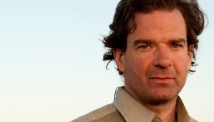
Peter Bergen
Peter Bergen
The lesson that Zawahiri drew from the Algerian war was that participating in democratic elections was strictly for suckers; far better to seize power through violence and then impose Taliban-style sharia law because "the crusaders" and their allies in the Arab world would never allow the emergence of a true Islamist state.
In 1991, the same year that the Algerian civil war began, Zawahiri released his first book, "The Bitter Harvest." The book was a vicious diatribe against the Muslim Brotherhood and other similar Islamist parties for participating in "democracies, elections and parliaments."
Now Zawahiri gets to say "I told you so."  Earlier this month Zawahiri posted a 15-minute recording on militant websites. In the recording Zawahiri explained that the military coup that deposed Egypt's elected president, Muslim Brotherhood leader Mohamed Morsy, proved that democracy had failed.
Until recently Zawahiri has been largely overshadowed by his charismatic former boss Osama bin Laden who was killed in a U.S. Navy SEAL raid in Abbottabad, Pakistan, two years ago. 
Now the 62-year-old Zawahiri has dramatically stepped into the spotlight as the leader of al Qaeda and its several affiliated groups around the world.  
The message traffic during the past weeks between Zawahiri and the commander of al Qaeda's virulent Yemeni affiliate containedcode words suggesting some kind of attack was potentially imminent.
Those messages were intercepted by American intelligence and led to the unprecedented closure last week of some two-dozen U.S. embassies and consulates across the Middle East, South Asia and Africa. Germany, France and Britain also closed their embassies in Yemen because of the threat.
Zawahiri's success or failure as the head of al Qaeda will be crucial to how the terror network moves forward as it marks its first 25 years of existence this weekend.
A recent Harvard Kennedy School study of 131 terrorist groups that have gone out of business found that they averaged 14 years of existence.
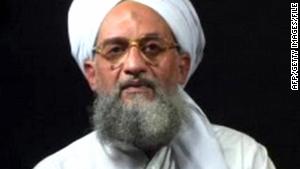
Ayman Al-Zawahiri.
Ayman Al-Zawahiri.
Al Qaeda has already shown an ability to survive well beyond the life of an average terrorist group. The big question is whether Zawahiri can successfully lead the al Qaeda network so it can thrive in today's chaotic conditions in the Middle East and can last another 25 years.
Zawahiri is a humorless religious fanatic whose forehead is marked with a prominent black scar known in Arabic as a zabiba or "raisin," the result of the many decades he has spent touching his head repeatedly to the floor as he prostrated himself in prayer. 
Despite his dour personality, Zawahiri has proven to be more capable as the leader of al Qaeda than many analysts -- including myself — had initially thought.
In the past year Zawahiri has brought two new official affiliates into the al Qaeda network: Somalia's militant al-Shabaab group and Syria's Jabhat al-Nusra, which is widely regarded as the most effective force fighting the Assad regime.  
Zawahiri also had no problem transferring already existing al Qaeda affiliates' allegiances from bin Laden to himself. In the three months following bin Laden's death, the leaders of al Qaeda in Iraq, the Yemeni-based al Qaeda in the Arabian Peninsula and the North African al Qaeda in the Islamic Maghreb all pledged their allegiance to Zawahiri as their new overall commander.
Zawahiri has been preparing for this moment all his life, first setting up a jihadist cell in his native Cairo when he was only 15. Like many revolutionaries before him Zawahiri is the son of privilege -- he's from a prominent Egyptian family of ambassadors, lawyers and clerics.
As a teenager Zawahiri believed that the Egyptian government led by Anwar Sadat had abandoned Islam and therefore had to be overthrown. Sadat signed Egypt's ceasefire agreement with Israel in 1979, effectively signing his own death warrant. 
In 1981, now trained as a surgeon, Zawahiri was arrested along with hundreds of others for his alleged role in Sadat's assassination and was imprisoned and tortured by Egyptian authorities, an experience that further radicalized him. 
Once he was out of jail in the mid-1980s, Zawahiri made his way to Peshawar, Pakistan, where thousands of militant Arabs were then gathering to support the Afghan jihad against the Soviet Union. 
It was there in 1986 that Zawahiri first met bin Laden, at that time the shy, monosyllabic son of a Saudi billionaire. For bin Laden the slightly older, cerebral Zawahiri presented an intriguing figure, someone far more experienced politically than himself. For Zawahiri, bin Laden also presented an interesting opportunity: someone who was on his way to becoming a genuine war hero in the jihad against the Soviets and whose deep pockets were well known. They would go on to embark on a marriage of convenience that would have hellish consequences.
During the late 1980s Zawahiri gradually won over bin Laden to his more expansionist view of jihad. Faraj Ismail, an Egyptian journalist who covered the Afghan war against the Soviets, recalls that it was Zawahiri "who got Osama to focus not only on the Afghan jihad, but regime change in the Arab world." 
Bin Laden then took the next step, urging Zawahiri to see that the root of the problem was not simply the Arab "near enemy" regimes, but the "far enemy," the United States, which propped up the status quo in the Middle East, a shift in strategy that took place when al Qaeda was based in Sudan in the early 1990s. Bin Laden lectured to his followers there about the necessity of attacking the United States without which the "near enemy" regimes could not survive. Noman Benotman, a Libyan militant who was then close to bin Laden and Zawahiri, recalled that, "Osama influenced Zawahiri with his idea: Forget about the 'near enemy;' the main enemy is the Americans."
When Zawahiri first arrived in Taliban-controlled Afghanistan in 1997, following a six-month spell in a Russian jail, his relations with bin Laden were on a quite different footing than they had been a decade earlier. Bin Laden was now the head of a fast-expanding terrorist organization while Zawahiri was the penniless leader of an obscure Egyptian terrorist group.
It was now bin Laden who took Zawahiri under his wing. And even then bin Laden kept Zawahiri at some distance. It was only in the summer of 2001 that al Qaeda's leader told Zawahiri the details of the coming attacks on New York and Washington, and that was only after Zawahiri's Egyptian Jihad Group had formally merged with al Qaeda in June.
Bin Laden exercised near-total control over al Qaeda, whose members had to swear a religious oath personally to bin Laden, so ensuring blind loyalty to him. Bin Laden's son Omar recalls that the men who worked for al Qaeda had a habit of requesting permission before they spoke with their leader, saying, "Dear prince: May I speak?" Even Zawahiri would ask bin Laden to be permitted to speak.
But now that he is the new boss of al Qaeda, Zawahiri has shown that he no longer feels bound by bin Laden's previous decisions. In 2010 bin Laden instructed the Somali militant group al-Shabaab to keep its association with al Qaeda a secret, fearing that openly linking the two organizations would hinder Shabaab's fundraising efforts. Zawahiri, who had petitioned bin Laden to reconsider his views about the proposed merger between al-Shabaab and al Qaeda, announced formal ties between the two groups in early 2012.
Zawahiri, however, has also had some problems keeping control over the far-flung al Qaeda network. During the spring of 2013 Zawahiri personally intervened to settle a dispute between the Syrian militant group Jabhat al-Nusra and al Qaeda in Iraq. Zawahiri rejected al Qaeda in Iraq's assertion of control over al-Nusra and declared the Syrian group to be under his direction.
However, in June 2013, Abu Bakr al-Baghdadi, the leader of al Qaeda in Iraq (AQI), posted an audio recording online rejecting the order from Zawahiri. This shows that AQI is willing to go public todismiss the directives of al Qaeda's leader, something that would have been unimaginable when bin Laden was in charge.
After 9/11, Zawahiri acknowledged in his autobiography "Knights Under the Banner of the Prophet" that the most important strategic goal of al Qaeda was to seize control of a state, or part of a state, somewhere in the Muslim world, explaining that, "without achieving this goal our actions will mean nothing."  
Indeed, the yardstick by which Zawahiri will be judged as an effective leader of al Qaeda by his fellow militants is the extent to which he can take advantage of the chaotic post-Arab spring conditions in countries such as Egypt, Yemen, Syria, Iraq and Libya to establish safe havens for al Qaeda and its affiliated groups and use those havens to then launch effective attacks against Western targets.  
In Pakistan where Zawahiri is generally believed to be hiding and also in Yemen, CIA drone shrikes have eliminated dozens of al Qaeda's leaders over the past three years and establishing a viable safe haven in either country seems quite unlikely. However, a long-term safe haven for Jabhat al-Nusra, al Qaeda's affiliate in Syria, in the heart of the Arab world could create an organization with the intent and capacity to attack the West. 
Jabhat al-Nusra  ("the Victory Front") has been able to garner considerable support from Syria's Sunni population, because it is the premier fighting force in the campaign to topple Assad, and because it is providing critical services, such as food, hospitals and sharia courts to the embattled population. For the moment, however, Jabhat al-Nusra is entirely focused on overthrowing the Assad regime, a project that may take years to achieve.
Al Qaeda was founded 25 years ago between August 18 and August 20, 1988 during the course of a series of meetings that took place over the course of three days in the sweltering heat of Pakistan's summer in bin Laden's house in the city of Peshawar. 
According to the minutes of those meetings, bin Laden presided over discussions involving eight other men who deliberated about how best to establish a new organization that would take holy war to other countries. The minutes noted that "al Qaeda is basically an organized Islamic faction; its goal will be to lift the word of God, to make His religion victorious."
Zawahiri was not at that founding meeting of al Qaeda and for much of the early history of the group he was not a central player in the organization. Today Zawahiri is al Qaeda's overall boss, and he now has the difficult task of turning around an organization whose last successful attacks in the West were the multiple suicide bombings on London's transportation system on July 7, 2005.  
If he is to succeed, Zawahiri will have to come up with something more significant than just getting U.S. embassies and consulates to close for a week. 
Wherever Zawahiri is right now he is surely watching the unrest unfolding in Egypt with considerable relish and as a real opportunity to exploit. Al Qaeda aligned groups already have footholds in the remote desert regions of Sinai in eastern Egypt and organizations such as Zawahiri's own Jihad Group, which formally merged with al Qaeda in the summer of 2001, have a long history in Egypt.

Egypt: Clashes turn Cairo square into bloody 'war zone'

Cairo (CNN) -- Egyptian security forces stormed two sit-ins orchestrated by supporters of ousted President Mohamed Morsy early Wednesday, bulldozing tents and escorting away hundreds of protesters, CNN correspondents say.
At a makeshift hospital, CNN's Reza Sayah described walking through the blood of the injured.
"We have witnessed scores of injured brought on stretchers before us. Many of them were in bad shape. It looked like many of them had been shot," he said. "I have personally never seen this much bloodshed in what, according to what we've seen over the past six weeks, had been a peaceful demonstration."
Egypt's interim government and Morsy's Muslim Brotherhood are reporting scores of people have been killed in what's being dubbed the country's bloodiest day since the 2011 revolution.
CNN correspondents described bloody scenes as security forces clash with Morsy supporters.
"I think what we're seeing right now is just the beginning of what is promising to be a very, very long and bloody battle as the interim government and the security forces try to regain control of the streets," CNN's Arwa Damon reported.
Arriving earlier at one of the entrances to the Rabaa al-Adawiya Square encampment, Sayah said the scene resembled "a war zone."
Thick plumes of black smoke were rising through the air from where it was understood security forces had entered the area and pro-Morsy supporters were facing off against those forces, he said.
Protesters were breaking bricks and gunfire could be heard, while tear gas was filling the air.
"Up above there are military helicopters and this is just an all-out fight and I think this is what a lot of people were concerned about -- this kind of violent scene," he said.
"There's heavy tear gas being used. A lot of people are emotional, we've seen women cry, we've seen people appear to lose consciousness because of the tear gas and now we just wait to see what happens.
"This is going to be an incredibly difficult demonstration to clear out. Not like (the Nahda camp) that was cleared out earlier today by security forces -- this is a much larger sit-in."
As Sayah spoke to CNN, he described protesters barricading the street where his television crew had arrived and where fighting had broken out.
It was unclear whether the clash had involved security forces or residents opposed to the sit-in, he said.
"That's not unusual for residents who are against the Muslim Brotherhood -- against the former president -- to get in on these fights."
The protesters appeared to be surrounded on all sides, he said.
"This is the most intense gunfire that I've personally heard during these clashes over the past six weeks. Clearly some of it automatic weapons, some of it sounds like it's coming from rooftops.
"I haven't seen any weapons on this side -- I haven't seen any protesters firing weapons but they are breaking bricks, throwing rocks -- it's not clear what they're throwing at. But there's a lot of chaos here."
Two hours later, Sayah said the outcome of the gunfight had been "incredibly bloody."
"Over the hours we've seen one body after another pass through to a makeshift clinic."
On the other side of the square, Damon said riot police had been firing tear gas "as groups of pro-Morsy demonstrators tried to break through police lines to join the encampment."
Military units could be seen behind the riot police, she said.
"At least four ambulances passed through the police lines on their way toward the site of the sit-in. Two members of the security forces could be seen being put into the ambulances."
Damon and her team later moved to another entrance to the square after experiencing some hostility.
"There were a few individuals in the crowd who were very anti-Western, anti-American, getting very aggressive toward the CNN team.
"Other individuals in the crowd were helping us to pull back from that situation," she said.
Damon and her team later came under fire while she was reporting live on CNN.
Three other journalists were later reported shot, two fatally, while covering the unrest. One of those killed wasMick Deane, a former CNN cameraman who had been working for Sky News for the past 15 years.
In the chaos of the raids, it has been impossible for CNN to verify the claims and counterclaims of protester casualties.
State TV reported that at least 149 people had been killed and more than 1,400 wounded.
The Muslim Brotherhood said earlier that 200 Morsy supporters were killed and more than 8,000 were injured. But the party has given exaggerated figures in the past, only to revise them later.

Opinion: Don't cut Egypt aid, use diplomatic muscle

Editor's note: David Rothkopf writes regularly for CNN.com. He is CEO and editor-at-large of the FP Group, publishers of Foreign Policy magazine, and a visiting scholar at the Carnegie Endowment for International Peace. Follow him on Twitter.
(CNN) -- The slaughter of hundreds in Egypt this week was horrifying. The response of the United States to that slaughter seemed puny and impotent. The president and the secretary of state offered strongly worded condemnations, and the United States canceled its participation in a military exercise that probably wouldn't have happened anyway, given the unrest.
Around the world critics suggested the United States was either effectively condoning the violence or sending a strong message that it wouldn't penalize the Egyptian military for this or future harshness. It didn't help that after his statement the president slipped off for a round of golf.
The unnecessarily callous optics of the golf game aside, the unsettling reality is that America's options were puny and likely to have very little effect. Indeed, the White House wisely avoided falling into the trap of "feel good measures:" bold gestures that may resonate but ultimately won't work.
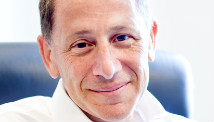
David Rothkopf
David Rothkopf
Some argue the United States should suspend the delivery of some or all the $1.3 billion in annual aid it sends to the Egyptian government. But this would only further reduce the limited influence we have over the Egyptian military.
It is important to remember that after Egyptian President Mohamed Morsy's overthrow, governments from the Persian Gulf in a matter of days offered the new Egyptian government 10 times the amount the United States gives each year. Not only did this shift the balance of influence away from the United States, but it also raises the possibility that they might well have replaced any funds we withdrew, blunting the impact of our actions.
It is also important to remember that the situation in Egypt is not black and white. While there is no excuse for the kind of massacres that took place this week, the Muslim Brotherhood also has a share of responsibility for the situation on the ground. The Morsy government regularly abused its authority, trampled on basic human rights and was so widely reviled in Egypt that its overthrow was welcomed by tens of millions of citizens.
Indeed, if you are looking for a place to fault the U.S. response, look to our relative tolerance of Morsy's abuses and our failure to strongly and effectively call him out as his government crushed personal freedoms, suppressed the press, threw opponents in jail and stood by as the Muslim Brotherhood actively sought to sow discord throughout the Middle East.
Had the United States been tougher back then and had it worked more with the international community to tie total aid flows to better behavior, it could have helped forestall the current situation. The United States consistently did and said too little too late. It also fell into the trap of overstating the legitimacy that being elected conferred on Morsy, even as he undercut that legitimacy by acting in a perniciously undemocratic way.
This last overall point contains the secret to effective U.S. leverage over Egypt and many countries these days. The United States cannot have much impact acting alone. Unless--in an instance like this-- it can speak for a broad cross section of aid-giving countries and institutions, the impact of any conditions it sets is likely to be limited.
Impact requires purposeful, active political and economic diplomacy at the highest level—including the willingness to pressure friends. It also requires having a clear plan. Finally, those with whom the United States is interacting, be they friends or adversaries, have to believe that it has the resolve to follow through -- and the willingness to take materially positive action if things go the way America wants.
But a United States that is post-Iraq and post-Afghanistan is correctly seen in the Middle East and elsewhere as "leaning back." A trifecta of forces has contributed to this:
The huge costs and damage of our misadventures in the region have left us disinclined to further commit major resources or incur further risks. Our domestic economic problems have led us to turn inward and question how we allocate our resources. And the polarization in U.S. politics has both produced divisions that make action hard and empowered the extreme wings of both parties, groups that for all their divisions happen to share a taste for isolationism.
American inaction in Syria, the growing violence in Iraq, our apparent inclination to get out of Afghanistan at any cost, and our relative silence on the decaying situation elsewhere in North Africa all contribute to the unhelpful perception that we are not going to put our shoulder into much in the region (or elsewhere for that matter).
It's not that we'll be absent. Not that we won't issue statements. Not that we won't take some modest actions. It's just that we will do less where we can do less. We will hesitate more. And with each illustration of this—whether our restraint is soundly based or not—we lose credibility and thus leverage.
This is the hard choice for America: Embrace the risks and costs of real engagement or accept those associated with a much more passive role. This doesn't mean we have to be foolish. We don't need more Iraqs.
But the lesson of Iraq was not to never intervene again. It was to never do so rashly, recklessly or for the wrong reasons. It was to resist the temptation to act alone, to step up to the hard work of real diplomacy, to keep our eye on our nation's need to be a more effective leader in the international community, rather than simply the bullying hyperpower. It was to understand that the trick of leadership is actually getting others to follow, building coalitions, leveraging our power with that of others.
Because as we are now discovering, sometimes the greatest costs of mistakes like the ones we made in Iraq and Afghanistan are the way they limit our ability or inclination to take action in the future when it is truly necessary.

Standoff at Cairo mosque-turned-makeshift morgue follows deadly clashes

Cairo (CNN) -- Hundreds of people were caught up early Saturday in a standoff between Islamist supporters of deposed President Mohamed Morsy and the Egyptian military at a mosque-turned-makeshift morgue, raising fears of a widening violence that will further push the country into chaos.
The Al-Fateh mosque near Ramses Square in central Cairo has become the latest flashpoint in the growing crisis after more than 1,000 people reportedly sought refuge following Friday's clashes between protesters primarily aligned with the Muslim Brotherhood and security forces.
Protesters took those killed and wounded in the clashes at the Ramses Square to the mosque, where the Muslim Brotherhood established a makeshift field hospital.
State-run EGYNews, citing military officials, reported that security forces will provide safe passage for those inside the mosque.
But those trapped are afraid to leave because they believe they will be attacked by plainclothes "thugs" aligned with the military, citing similar incidents in recent days, a doctor inside the mosque told CNN by telephone.
The see-saw allegations have only added to growing tensions between the two sides, which have accused one another of inflating allegations of violence to further their stance.
CNN cannot independently confirm the claims by the protesters or the military.
The group outside fired at the mosque, breaking a window, and then tried to break down the front door, the doctor and two people inside told CNN. The military has said the women can leave, but the men will be arrested, said the doctor, who asked not to be identified because of security fears.
But EGYNews, citing security officials, reports that people are being prevented from leaving the mosque by protesters.
Local media purported to broadcast live footage from inside the mosque, showing men and women with their faces covered by medical masks and scarves over fears security forces will fire tear gas.
The standoff came hours after thousands of protesters defied a government-imposed curfew, staying put in Cairo's Ramses Square and the streets, while soldiers and armored personnel carriers were deployed around the square and adjoining streets.
The military warned it would "deal firmly" with anyone who breaks the curfew, raising fears of a repeat of Wednesday's military raids on pro-Morsy protest camps that left an estimated 580 dead and 4,000 wounded.
Egyptian state-run Nile TV reported 821 Muslim Brotherhood members were arrested across Egypt on Friday on charges of rioting and creating violence. The same report quoted Interior Ministry as saying authorities seized seven hand grenades, five automatic weapons, pistols and 710 rounds.
The clashes began Friday following afternoon prayers, when thousands of Muslim Brotherhood protesters demanding the return of Morsy took to the streets promising a day of rage.
Another bloody day across country
Conflicting casualty figures were being reported: A medic at a Muslim Brotherhood-supported field hospital near Ramses Square said 54 people had been killed, according to the official al-Ahram news agency, while state-run Nile TV putting the number at 17 people killed and 40 wounded.
In northern Egypt, at least 16 people were killed and 140 wounded in fighting between Morsy supporters and the military in the coastal city of Alexandria, Nile TV reported, citing medical officials. But al-Ahram put the number at 21, citing local health ministry officials.
In nearby Suez City, soldiers moved late Friday against a number of pro-Morsy demonstrators attempting to camp out at a square after the curfew, al-Ahram reported. There were no immediate reports of casualties.
The casualties have not been limited to Morsy supporters and security forces. A number of bystanders, residents and journalists have been killed as the violence has widened.
Fighting also was reported between Morsy supporters and residents in the northeast city of Ismailia and in the Nile Delta cities of Tanta and Damietta during the curfew, the news channel reported.
By nightfall Friday, state-run media reported sporadic fighting between roving bands of armed protesters and residents in Cairo, where military helicopters could be seen patrolling from the sky as soldiers fanned out across the streets.
Smoke wafted through Ramses Square from a fire that engulfed a nearby commercial building. It was unclear what caused the fire.
Earlier in the day, A CNN crew witnessed men in plainclothes standing next to military tanks and firing into crowds. The crew also saw that some in the crowd were armed.
Security forces fired tear gas at a mass of people on a major bridge leading to the centrally located Ramses Square. Machine-gun fire was heard in central Cairo as a military helicopter flew overhead.
Elsewhere in Cairo, armed groups were reportedly firing from rooftops, attempting to down a military surveillance helicopter, state-run media reported, citing security sources.
Armed protesters also attacked a police station in central Cairo, killing the police chief, state-run EGYNews reported.
Since Wednesday, 52 police officers have been killed, state television reported. Earlier reports of 64 dead were incorrect. State TV also said 25 police stations and 10 churches have been attacked. The interim government has blamed the Muslim Brotherhood for the attacks.
At least 263 people, described by armed members of the Muslim Brotherhood, have been arrested across the country, according to the Egyptian Ministry of Information.
"The struggle to overthrow this illegitimate regime is an obligation," the Muslim Brotherhood said on its website Friday, while urging people to protest peacefully.
Echoes of violence
The violence echoed the upheaval that preceded the popular uprising that ousted Hosni Mubarak from power in 2011. The military removed Mubarak after protests against his authoritarian rule, but not before an estimated 840 people were killed.
The generals yielded power to Morsy after elections, but the new president soon was accused of pursuing an Islamist agenda and excluding other factions from the government. The military ousted Morsy from office on July 3, a move that triggered massive protests among his supporters.
Morsy's supporters say the deposed president wasn't given a fair chance and that the military has returned to its authoritarian practices of the Mubarak era.
The government reinforced the comparison by imposing the month-long state of emergency, a favored tactic of Mubarak.
Morsy and key members of the Muslim Brotherhood have been detained.
The most senior Muslim Brotherhood leader still at large, Essam el-Erian, said Thursday the protests will continue until Morsy is returned to office.
"They can arrest me and 100 of us, but they can't arrest every honorable citizen in Egypt," el-Erian told CNN. "They can't stop this glorious revolution."
Military vehicles were deployed Friday across Cairo and Giza, taking up positions in squares and securing important institutions, EGYNews reported, citing security officials.
The news agency said the military increased checkpoints at all entrances to Cairo to prevent the smuggling of arms to protesters.
Police will use live ammunition to subdue any attack against police facilities, state media said.
Western alarm
The escalating violence has alarmed the West, where leaders have long looked to Egypt as a stabilizing force in the region.
French President Francois Hollande and German Chancellor Angela Merkel called for a meeting next week of European Union foreign ministers to coordinate a response to the violence in Egypt.
The EU's foreign policy chief, Catherine Ashton, called the rising casualty toll "shocking."
"Responsibility for this tragedy weighs heavily on the interim government, as well as on the wider political leadership in the country," she said.
Egyptian authorities rejected criticism from U.S. President Barack Obama and other world leaders on Wednesday's ferocious clashes, which left at least 580 people dead after security forces broke up huge sit-ins in Cairo, according to the Health Ministry.
Obama, who has resisted calls to cut off military aid to Egypt and label Morsy's ouster a coup, on Thursday stressed the United States would not support one political faction over another. Even predominantly Muslim nations voiced displeasure, with Turkey recalling its ambassador in Egypt in light of the crisis, a Turkish foreign ministry representative said.

http://edition.cnn.com/2013/08/16/world/meast/egypt-protests/index.html?hpt=hp_inthenews